Interview with Dr. Byron Williams Jr., Chief of Cardiology, Emory Saint Joseph’s and Professor Emeritus, Emory University Hospital.
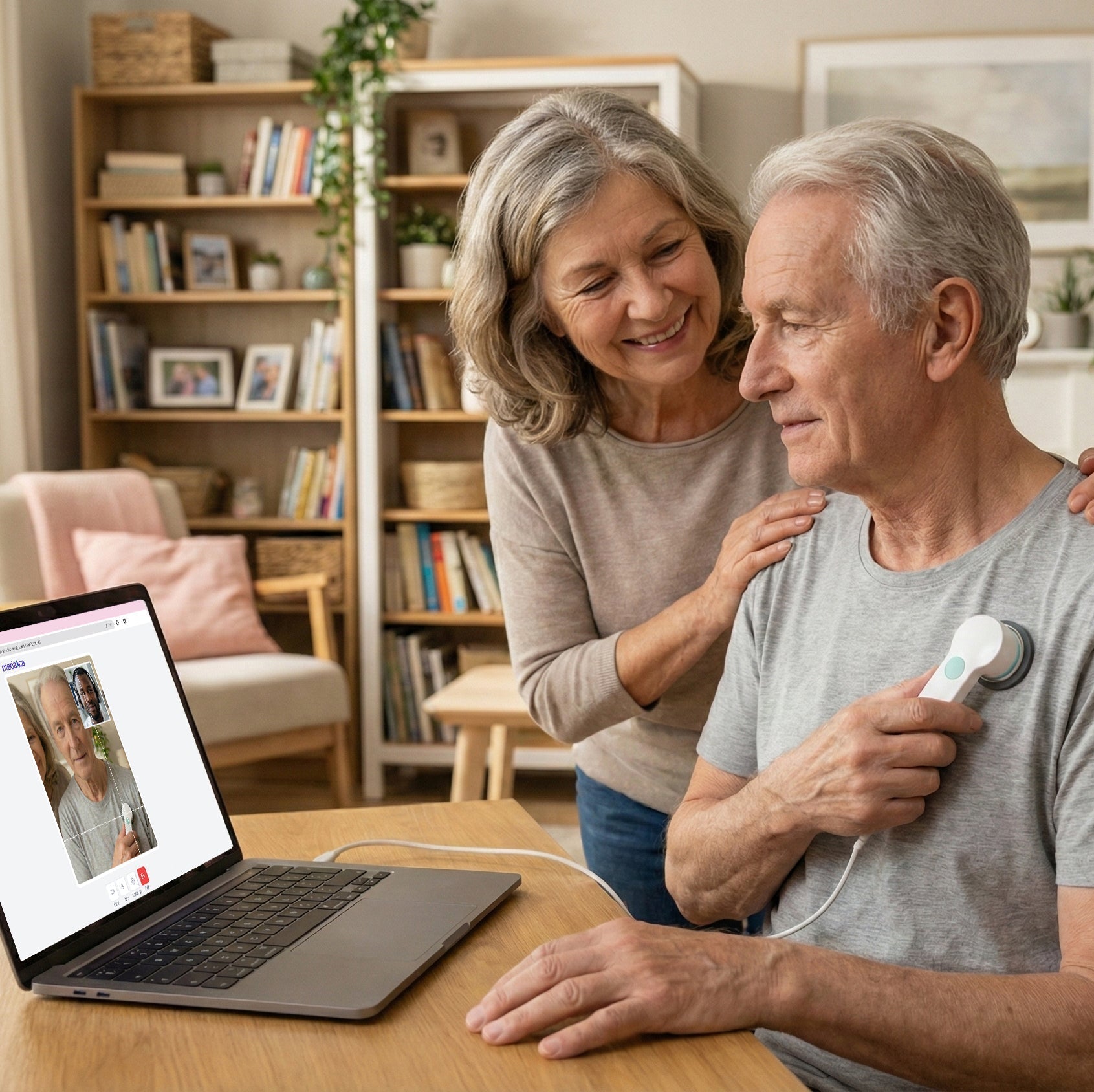
Dr Byron Williams Jr., Chief of Cardiology, Emory Saint Joseph’s and Professor Emeritus, Emory University Hospital talks about the Emory Hospital pilot using the Medaica platform to remotely monitor and examine chronic heart patients at home.
Medaica: What is your experience using the Medaica Platform
Dr. Williams: I certainly found it to be very helpful and accurate in our auscultation of patients. I was able to monitor some of my chronic patients remotely with the stethoscope and I could hear their heart murmurs clearly and I could hear their lungs and I could also hear vascular bruits very clearly, as if I was in the room with the patient. The youngest we did it on was probably about 50 to over 80 years of age. Most of them were in the Medicare age group and I think that it was a very satisfying experience for myself, my nurse practitioner, as well as the patient. We found it easy to use and the patients really enjoyed the process and thought it was very helpful.hat clinical value did the
Medaica: What clinical value did the Medaica Heart Exam deliver?
Dr. Williams: It added tremendously to the cardiology exam. Prior to using the (Medaica M1) stethoscope we could only gather information like reporting their weight and vital signs, and all of which are important. But when you add in the ability to hear the lung sounds, the heart sounds, and the vascular sounds, it becomes a real exam. It was very close to or I would say similar to my stethoscope in the room with the patient.
Medaica: What clinical What conditions could you detect?
Dr. Williams: You can recognize, for example, aortic stenosis that has previously been undetected and know that they need to come to the clinic to get further testing and hopefully prevent problems down the road.
Medaica: Patient compliance improved with the Medaica Heart Exam?
Dr. Williams: They know that I am doing a special cardiac exam on them. It does enhance their desire to be compliant and we did find that.
Medaica: What was the strategy for using the Medaica platform for rural care?
Dr. Williams: One of our motivations was just to provide a cardiology consultation and save that patient a two or three hour trip to Atlanta and avoiding the time, the expense, and the traffic of coming to the clinic at Emory. We found it very helpful. Many times we could screen the patients and get further testing closer to home.
Medaica: What efficiencies did you find using the Medaica platform?
Dr. Williams: We get people sent to us all the time with heart murmurs that are not necessarily to be sent to the cardiologist at that point in their life. And I think your technology lends itself very well to screening those people, especially with the addition of AI or an experienced cardiologist using your auscultation method. So I think it does avoid unnecessary visits and unnecessary testing.
Medaica: What improvements did you find in your telehealth program using Medaica?
Dr. Williams: Telehealth and the stethoscope certainly could monitor them more closely for congestive heart failure and maybe treat them before they have to come back to the emergency room. Even a well-trained PA or nurse practitioner could use the technology to help avoid unnecessary visits.
Medaica: What are some of the patient outcomes and clinical efficiencies via Medaica?
Dr. Williams: A large number of people with aortic stenosis go undiscovered until they're very far down the line, but it could have been detected many years earlier and that could have been avoided. And we would like to correct the aortic stenosis before they develop an enlarged heart and congestive heart failure. Mitral regurgitation, aortic regurgitation, once again you would like to get them involved long before they develop an enlarged heart and congestive heart failure. It could be the standard of care for detecting murmurs early in the course of the disease. Your technology lends itself to that, that they often have murmurs that are easily detectable if someone listens to them many years before they develop problems. So it could be the standard of care for screening for those people. Early detection of many of these abnormalities would lead not only to saving lives, but reducing the cost of their care because if you operate on them later in life, it's number one higher risk, number two more costly procedure to be done. So a simple closure technique as a youngster and they're out of the hospital the next day, otherwise as an adult you're doing sometimes still open heart surgery to fix the problem. So big savings there.
Medaica: How did you use the Medaica platform as a Clinical Diagnostic Support tool?
Dr. Williams: It's really a technology that's long overdue for screening murmurs and heart conditions, aortic stenosis and hypertrophic cardiomyopathy. It lends itself very well to that with AI listening to the heart sounds appropriately and detecting this, it's much better than the general practitioner.